WordCraftVillage uses spaced-review concepts so you do not have to guess when to revisit a word. The review loop reacts to your quiz outcomes and schedules weak words sooner, while allowing stable words to rest for a longer interval. This timing logic is what transforms short-term recognition into long-term recall.
1. SRS/FSRS concepts in plain terms
Classical SRS repeats information at gradually longer intervals. FSRS-style approaches tune those intervals using response quality and historical stability. In product terms, this means your review queue should not be static. It should adapt to your memory strength over time, and it should penalize overconfidence less than pure fixed-timer systems.
In WordCraftVillage, you do not need to manually calculate intervals. You only need to keep a stable rhythm. Correct answers tend to stretch return intervals, wrong answers shorten them, and repeated corrections move words out of urgent review lists.
2. Why short daily review beats long weekly review
Memory decays continuously. If reviews are delayed too long, relearning cost rises and confidence drops. A short daily review loop catches words near their forgetting window. This lowers relearning effort and keeps sessions psychologically manageable. Five focused minutes daily often outperforms one long weekend session.
3. Practical review cadence
- Start each session with due review cards.
- Only after due queue is stable, add a small amount of new words.
- If accuracy falls, lower deck difficulty before increasing time.
- Use review-only mode when you want correction without reward pressure.
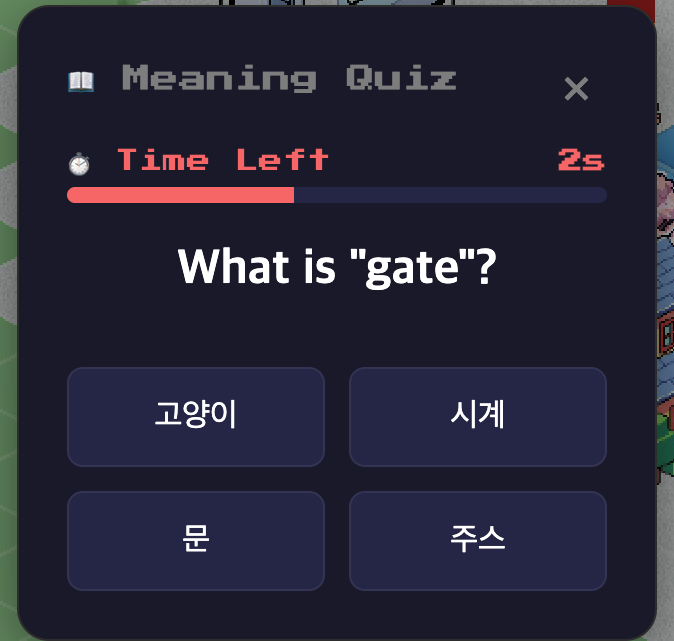
4. Visual reference

5. Failure patterns and recovery
- Backlog overload: solve by reducing new-word input for 2-3 days.
- Accuracy crash after level-up: step down one deck and rebuild confidence.
- Session fatigue: shorten sessions but increase frequency.
- Inconsistent return behavior: tie sessions to fixed daily triggers.